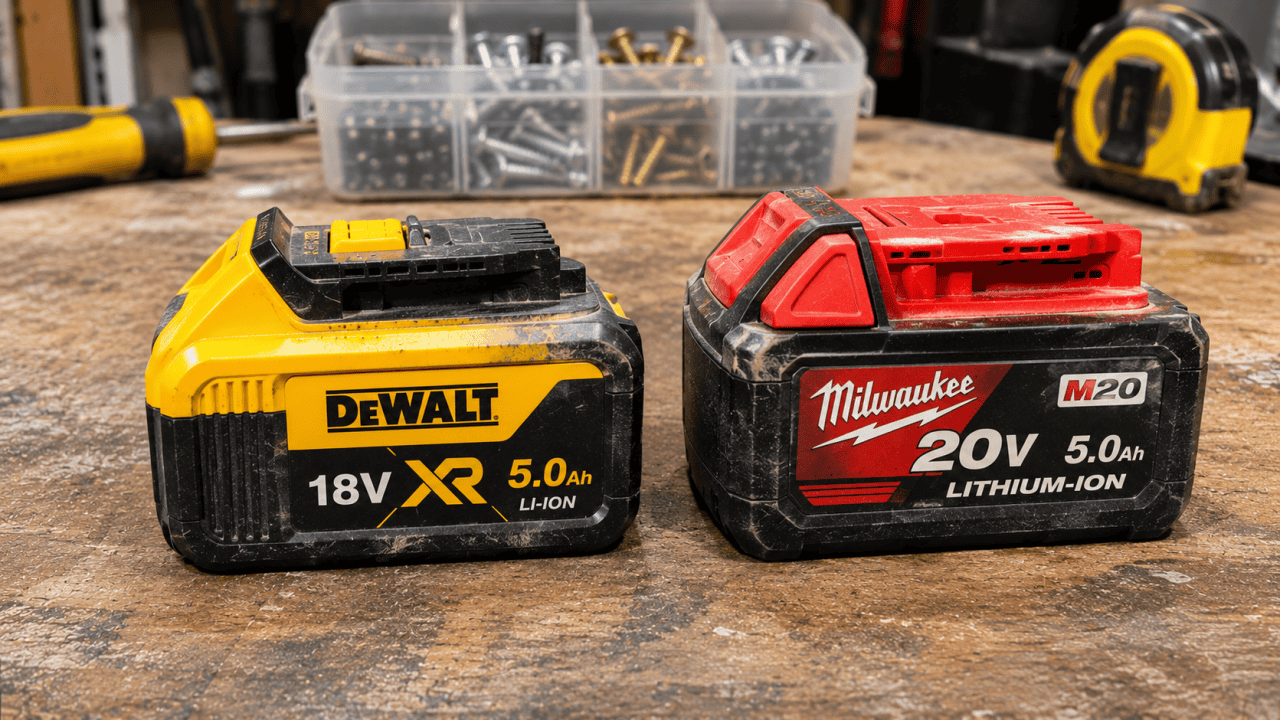
Walk down the tool aisle and you see 12V, 18V and 20V on the boxes. It looks like three steps of power. It is really two. 18V and 20V MAX are the same battery under two names, and 12V is the smaller, lighter class below them.
This guide explains where the numbers come from, what each class is good at and how to choose. It also covers the number that matters more than volts for runtime, which most boxes print in much smaller type.
The short answer in one table
| Label on the box | Cells inside | Working voltage | Fully charged | What it is |
|---|---|---|---|---|
| 10.8V | 3 | 10.8V | 12.6V | Compact class |
| 12V or 12V MAX | 3 | 10.8V | 12.6V | Compact class, same as 10.8V |
| 18V | 5 | 18V | 21V | Full-size class |
| 20V MAX | 5 | 18V | 21V | Full-size class, same as 18V |
Where the numbers come from
A cordless tool battery is a plastic case with lithium-ion cells inside, wired in a chain. Each cell gives about 3.6 volts while it is working. Fresh off the charger, with no load on it, the same cell reads about 4.2 volts. That higher reading drops within seconds once you pull the trigger.
The voltage on the box is the cell voltage multiplied by the number of cells in the chain:
- 3 cells x 3.6V = 10.8V working voltage
- 3 cells x 4.2V = 12.6V at full charge, sold as “12V MAX”
- 5 cells x 3.6V = 18V working voltage
- 5 cells x 4.2V = 21V at full charge, sold as “20V MAX”
So a brand can print the working voltage or the fully charged voltage for the same battery. Both are true. The word MAX and the small asterisk beside it are the hint. The fine print on a 20V MAX tool says the maximum initial voltage, measured without a load, is 20 volts and the nominal voltage is 18.
Bigger batteries in the same class have more cells, but they are added side by side in a second or third chain. That raises the capacity and leaves the voltage where it was.
Why the US says 20V and Europe says 18V
The naming depends on the brand and the market. In the United States, DEWALT, CRAFTSMAN, BLACK+DECKER, PORTER-CABLE and SKIL sell their full-size tools as 20V MAX or 20V. Milwaukee (M18), Makita (18V LXT), Bosch and Ryobi (18V ONE+) use 18V.
I work in Europe, where DEWALT sells the same platform as 18V XR. The tools and batteries match the American 20V MAX line. Only the label is different. The same goes for the small class: tools that were sold as 10.8V for years are now mostly labeled 12V.
Is 20V more powerful than 18V?
No. A 20V MAX drill and an 18V drill run on the same five-cell battery voltage. Differences in power between two drills come from the motor, the gearbox, the electronics and how much current the battery can deliver, not from the number on the box.
That means an 18V drill from one brand can easily beat a 20V MAX drill from another, and the other way around. Compare the tools by their specs and by what they are built for.
12V vs 18V/20V: the real differences
- Power. The full-size class has more of it. Higher voltage lets the tool deliver more power without drawing huge current, so 18V/20V tools handle long screws, large bits and saws with less strain.
- Size and weight. A 12V battery has three cells where the smallest 18V battery has five. The tools are shorter, the grips are slimmer, and the whole thing is easier to hold overhead or inside a cabinet.
- Runtime. At the same amp-hour rating, an 18V battery stores about two thirds more energy than a 12V one. More on that below.
- Price. 12V kits usually cost less than the same brand’s 18V/20V kits.
- Range of tools. This is the big one. Every brand’s 18V/20V line is far wider. Circular saws, grinders, sanders, nailers and garden tools are mostly on the big platform. 12V lines focus on drills, drivers and compact specialty tools.
Volts, amp-hours and watt-hours
Volts tell you the class of the battery. They do not tell you how long it runs. For that you need two more numbers.
- Amp-hours (Ah) are the capacity, printed on every battery: 1.5Ah, 2.0Ah, 5.0Ah. Think of it as the size of the fuel tank, for that voltage.
- Watt-hours (Wh) are the total energy in the battery. You get them by multiplying working volts by amp-hours. This is the number that lets you compare batteries of different voltages.
| Battery | Sum | Energy |
|---|---|---|
| 12V MAX, 2.0Ah | 10.8V x 2.0Ah | 21.6 Wh |
| 20V MAX / 18V, 2.0Ah | 18V x 2.0Ah | 36 Wh |
| 20V MAX / 18V, 5.0Ah | 18V x 5.0Ah | 90 Wh |
Two batteries can both say 2.0Ah and hold very different amounts of energy. The 18V one above holds about 67 percent more than the 12V one. Many batteries print the watt-hours in small type on the label, and it is worth looking for.
What brushless changed
Older 12V tools had brushed motors and felt weak. Brushless motors waste less energy as heat and are controlled by electronics, so they get more work out of the same battery. A current brushless 12V drill can do jobs that needed an 18V brushed drill some years ago.
The same is true one class up. If you compare a brushed 20V MAX drill with a brushless one from the same brand, the brushless model usually runs longer on a charge and is shorter in the body.
Which jobs need which class
| Job | 12V | 18V / 20V MAX |
|---|---|---|
| Flat-pack furniture | Ideal | Fine, but heavier than needed |
| Hanging pictures, shelves, curtain rails | Ideal | Fine |
| Cabinet hinges and hardware | Ideal | Fine |
| Electrical boxes, tight spaces, overhead work | Ideal | Works, tiring |
| Pilot holes and small holes in wood | Fine | Fine |
| 3-inch screws into framing lumber | Slow, with a brushless model | Better |
| Deck building | Not the right tool | Yes |
| Hole saws and large spade bits | Small sizes only | Yes |
| Drilling brick with a hammer drill | Light duty only | Yes |
| Circular saw, reciprocating saw, grinder | Compact versions, short cuts | Yes |
| Leaf blower, string trimmer, hedge trimmer | Rare | Yes, or a higher voltage |
| All-day professional use | As a second tool | Yes |
Which battery fits which tool
- 12V and 18V/20V do not mix. The batteries are different shapes and voltages. A 12V battery will not fit or run an 18V tool, or the reverse.
- Brands do not mix. A DEWALT battery does not fit a Makita or Milwaukee tool, even though the voltage is the same. Each brand has its own connector.
- 18V and 20V MAX from one brand are the same platform when they are the current slide-on lithium type. A European 18V XR DEWALT battery is the same pack as the US 20V MAX one.
- Old and new can differ. Older 18V tools that took a tall stem-style battery belong to an earlier system. Some brands sell an adapter to run new batteries in those old tools.
Third-party adapters that put one brand’s battery on another brand’s tool exist. They bypass the checks the tool and battery make with each other, and no tool maker supports them. I would not rely on one.
The practical point: when you buy your first cordless tool, you pick a battery system. Every tool you add later will be cheaper as a bare tool if it uses the batteries you already own. I cover this in my guide to the best cordless drills under $100 and in impact driver vs drill.
What about 36V, 40V and 60V?
The same math applies. Ten cells in a chain give 36V working voltage, sold as 36V or 40V MAX. Fifteen cells give 54V, sold as 54V in Europe and 60V MAX in the US. These batteries are for tools that need a lot of power for a long time: lawn mowers, chainsaws, large circular saws and table saws. Some systems use two 18V batteries together to reach 36V.
Which one should you buy?
- Your first cordless tool for a house: 18V/20V MAX. It does everything a 12V tool does, and the platform has every other tool you might want later.
- You only do light jobs indoors, or a full-size drill feels heavy: 12V. It is easier to handle and enough for furniture, shelves and repairs.
- You already own 18V/20V tools: a compact 12V drill or driver is a good second tool for tight spaces. Many tradespeople carry both.
- You work with tools every day: 18V/20V as the main platform, chosen by brand and battery range.
For my own work I have used Makita, DEWALT and Parkside tools, and DEWALT has been the best for me so far, mainly for performance and batteries. That is a point about the platform. The number on the box had nothing to do with it.
One drill from each class
These two picks show the difference between the classes. They are based on their Amazon listings (retrieved 2026-11-17). I have not tested these exact kits side by side. Check the current price before you buy.
20V MAX class: DEWALT 20V MAX brushless drill kit (DCD777D1)

A brushless drill/driver with a 1/2-inch chuck, two speeds and a 2.0Ah battery, on one of the largest battery platforms. By the math above, that battery holds 36 watt-hours. It has a 3-year limited warranty.
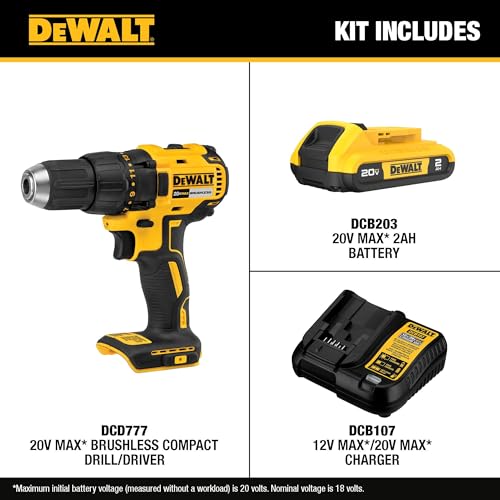
Check the current price of the DEWALT DCD777D1 on Amazon
12V class: BLACK+DECKER 12V MAX drill/driver (BDCDD12C)
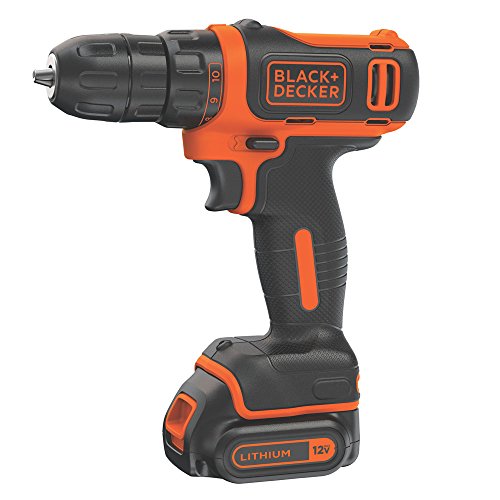
A compact, light drill/driver with a keyless chuck, an 11-position clutch and an LED light, with battery and charger in the box. It is a basic brushed tool for pictures, shelves and furniture, and it shows what the 12V class is for: small jobs done with a tool that is easy to hold.

Check the current price of the BLACK+DECKER BDCDD12C on Amazon
Frequently asked questions
Is 20V the same as 18V?
Yes. Both use five lithium-ion cells in a chain. 18V is the working voltage and 20V MAX is the voltage right off the charger with no load.
Is 20V better than 18V?
No. Power depends on the motor, the electronics and the battery, not on which of the two labels the brand chose.
Is 12V enough for home use?
For most indoor jobs, yes: furniture, shelves, pictures and small repairs. For decks, long screws, big holes and saws, the 18V/20V class is the better choice.
Can I use a 20V battery in an 18V tool?
Only within the same brand and the same battery system. A current DEWALT 20V MAX battery is the same pack as a current DEWALT 18V XR one. It will not fit another brand, and older stem-style 18V tools need an adapter if the brand makes one.
Is 10.8V the same as 12V?
Yes. Both are three-cell batteries. 10.8V is the working voltage and 12V is the full-charge figure, rounded down.
Does higher voltage mean longer runtime?
Not directly. Runtime depends on watt-hours, which is volts multiplied by amp-hours. A higher-voltage battery with the same amp-hours holds more energy, but a hungrier tool can use it up just as fast.
The bottom line
There are two classes. 12V, also sold as 10.8V, is compact and light. 18V and 20V MAX are one and the same full-size class. Choose 18V/20V for a first tool and for anything demanding, and 12V when size and weight matter more than power. Then look past the volts: the amp-hours, the motor and the range of tools on the battery platform will shape what you can do with it.