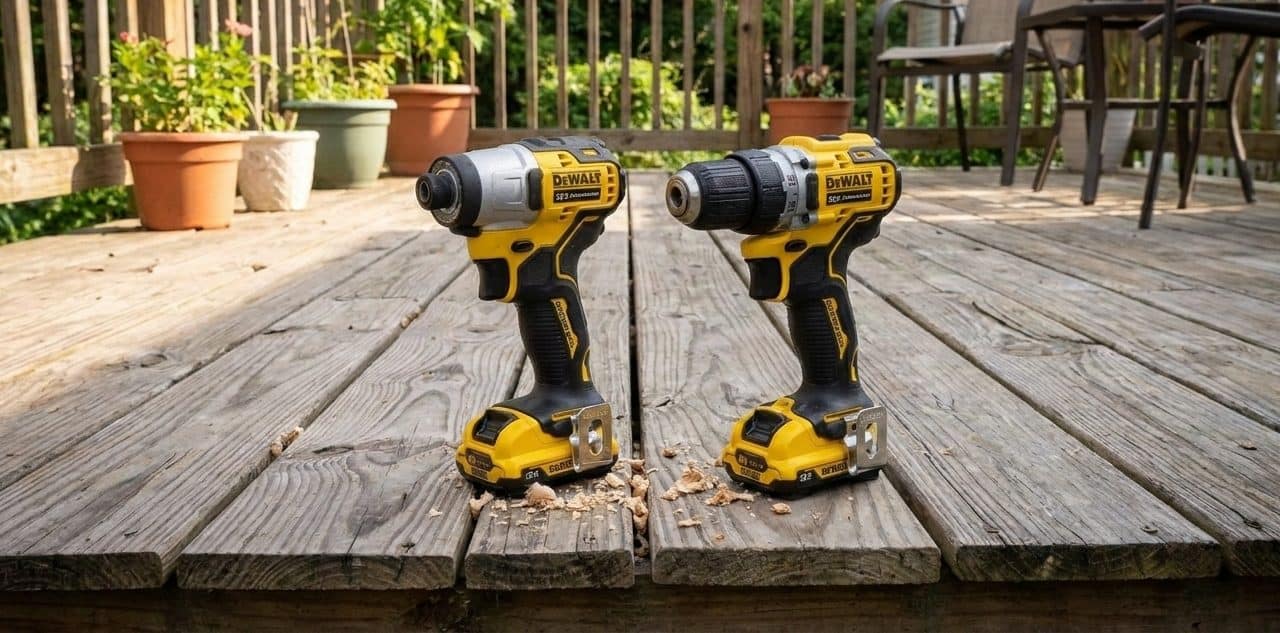
Both tools spin a bit, and from a few steps away they look the same. They work in different ways. A drill applies steady turning force and has a clutch that stops it at a set torque. An impact driver adds rapid rotational blows when the screw resists, which is why it sinks long fasteners a drill would stall on.
The short answer for most homes: buy a drill first. It drills holes and drives screws. Add an impact driver when you start building things with long screws. The rest of this guide explains why, job by job.
The difference in one table
| Drill | Impact driver | |
|---|---|---|
| Bit holder | Three-jaw chuck. Takes round and hex shanks. | 1/4 in. hex collet. Hex-shank bits only. |
| Action | Steady rotation with an adjustable clutch. | Rotation plus rotational impacts under load. |
| Best at | Drilling holes. Small and medium screws. Soft materials. | Long screws, lag bolts, stubborn fasteners. |
| Control | Clutch stops before you overdrive. | Usually no clutch. Easy to overdrive small screws. |
| Noise | Quiet. | Loud once it starts impacting. |
| Size | Longer head, heavier at the front. | Short and compact, fits between studs and joists. |
| Bits | Almost any bit. | Impact-rated hex bits. |
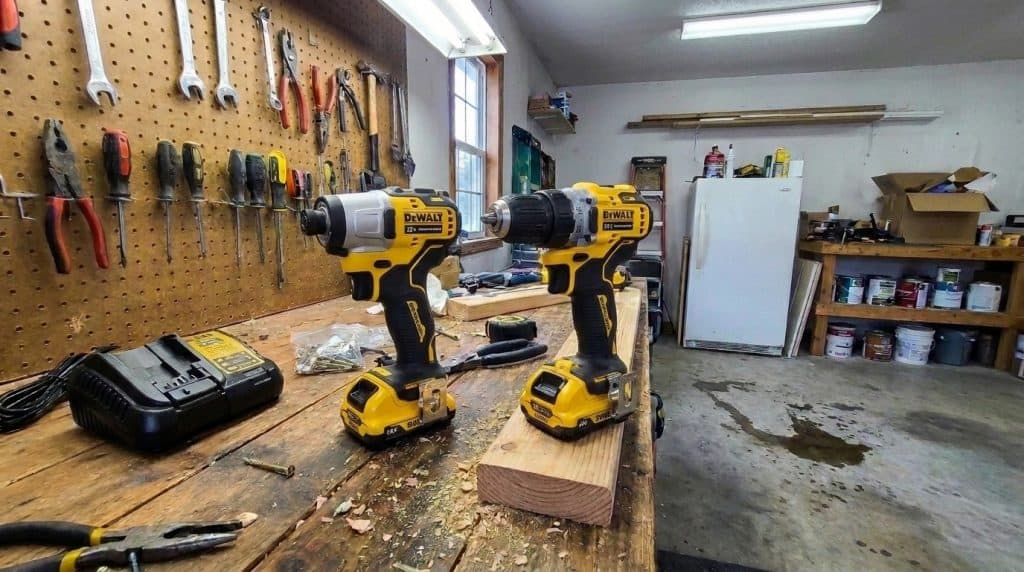
How each one works
A drill turns the bit with constant force from the motor. If the screw gets hard to turn, the force pushes back into your wrist. The numbered ring behind the chuck is the clutch. Set it low and the drill slips with a clicking sound before it can strip a small screw. Set it to the drill symbol and it gives full power for making holes.
An impact driver turns the same way until the screw resists. Then a spring-loaded hammer inside starts striking an anvil many times per second, in the direction of rotation. Each hit gives a short burst of torque. The hits go into the screw and not into your wrist, so driving a long screw takes much less effort.
Which tool for which job
| Job | Best tool | Why |
|---|---|---|
| Hanging shelves and pictures | Drill | You need a clean hole first, then a gentle hand on the screw. |
| Flat-pack furniture | Drill | The clutch protects small screws and soft board. |
| Cabinet hinges and door hardware | Drill | Small screws strip easily under impacts. |
| Pilot holes | Drill | Round-shank twist bits fit the chuck and run true. |
| Hole saws and spade bits | Drill | Steady rotation cuts cleaner and safer. |
| Drilling metal | Drill | Metal needs slow, steady speed and pressure. |
| Deck screws | Impact driver | Hundreds of long screws, far less strain on the wrist. |
| Lag bolts and structural screws | Impact driver | A drill often stalls on these. |
| Fence and shed framing | Impact driver | Long screws into dense lumber. |
| Removing a stuck or rusted screw | Impact driver | The impacts break it loose without camming out as easily. |
| Drywall screws | Either | A drill with the clutch set low gives more control. |
| Holes in brick or concrete | Neither | This is a job for a hammer drill. |
When a drill is the right tool
A drill is the one to own first. Its chuck grips round and hex bits, so it handles twist bits, spade bits, hole saws and driver bits. The clutch lets you set how hard it drives, which protects small screws and soft materials.
It also has two speed ranges. Low gear gives more turning force for big bits and screws. High gear spins fast for small holes. That range is what makes a drill the general-purpose tool in a house.
A drill is enough if you hang shelves, assemble furniture, drill pilot holes and drive the odd screw. If you are choosing one, my list of the best cordless drills for home use under $100 covers six kits.
When an impact driver earns its place
An impact driver is shorter, lighter and far better at long screws and lag bolts. It is also easier on your wrist, because the impacts do the work instead of your arm. You can drive a 3-inch screw with one hand and little pressure behind the tool.
The trade-offs are noise and control. Most models have no clutch, so an impact driver can snap or bury small screws. Many newer ones have two or three speed settings, and the lowest setting helps with smaller screws.
Add an impact driver if you are building a deck, a fence or a shed, or if you keep stripping screw heads with your drill.
Can you drill with an impact driver?
Yes, with hex-shank drill bits. It is fine for rough holes in wood, such as a quick pilot hole when the driver is already in your hand. For clean or precise holes, large holes and anything in metal, a drill is the better tool. The collet has a little play in it, and the tool starts hammering as soon as the bit meets resistance.
Can you drive screws with a drill?
Yes, and people did for decades before impact drivers were common. A drill is the better choice for small screws because of the clutch. It struggles with long screws in dense wood. You have to lean on it, the bit slips out of the screw head, and the drill may stall. A pilot hole helps a lot.
Impact driver, hammer drill, impact wrench: three different tools
- Impact driver: hits in the direction of rotation. It has a 1/4-inch hex collet. It is for screws.
- Hammer drill: a drill that also taps forward along the bit, like a tiny hammer behind it. It has a normal chuck. It is for holes in brick, block and concrete.
- Impact wrench: works like an impact driver but has a square drive for sockets and much more torque. It is for nuts and bolts.
- Combi drill: a name some brands use for a drill/driver with a hammer mode built in.
Bits: what an impact driver needs
An impact driver takes 1/4-inch hex-shank bits. They click into the collet without a chuck to tighten. Buy bits marked as impact rated. They are made to twist slightly under each hit. Ordinary driver bits are harder and more brittle, and under impacts their tips can chip or snap.
Impact-rated bits cost a little more. A drill takes almost any bit you already own, which is one more reason it is the cheaper tool to start with.
Noise and control
An impact driver is quiet until the hammer kicks in. Then it is loud, with a sharp rattling sound. Indoors, or on a long day of decking, wear hearing protection. Eye protection is sensible with both tools.
Control takes practice. Squeeze the trigger gently, let the screw seat, and stop when the head is flush. If you hold the trigger down, the driver keeps hitting and sinks the screw deep into the wood.
One tool or a combo kit?
If you know you will build a deck or a fence in the next year, look at a combo kit with both tools. Kits usually include two batteries and one charger, and they often cost less than buying a drill kit now and an impact driver kit later.
Stay on one battery system. A second tool is cheapest as a bare tool that runs on the batteries you already have. I have used Makita, DEWALT and Parkside tools over the years, and DEWALT has been the best for me so far, mainly for performance and batteries. That is why two of my three picks below are DEWALT.
What I would buy
These three picks are based on their Amazon listings and specs (retrieved 2026-11-16). I have not tested these exact kits side by side. Prices change often, so check the current price.
The drill to start with: DEWALT 20V MAX brushless DCD777D1

A brushless drill with a 1/2-inch chuck, two speeds and a 2.0Ah battery, on one of the biggest battery systems there is. It has a 3-year limited warranty. For a first drill in a house, this is the one I would pick.
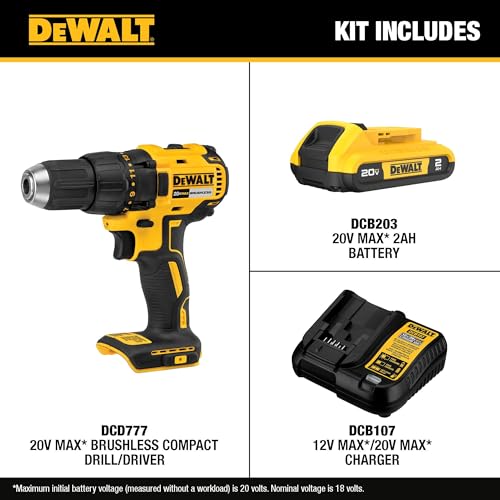
Check the current price of the DEWALT DCD777D1 on Amazon
The impact driver to add: SKIL PWR CORE 20 brushless kit (ID6739B-10)

This kit comes with a 2.0Ah battery and charger, so it works on its own. The listing rates the brushless motor at up to 1,800 in-lbs and gives it three speed settings, which helps with smaller screws. It also has a ring light around the collet and a collet you can load with one hand.

One thing to know: it runs on SKIL batteries, not DEWALT ones. If you already own a DEWALT drill, a DEWALT impact driver that shares your batteries is the smarter buy.
Check the current price of the SKIL ID6739B-10 on Amazon
Both at once: DEWALT 20V MAX drill and impact driver combo (DCK240C2)
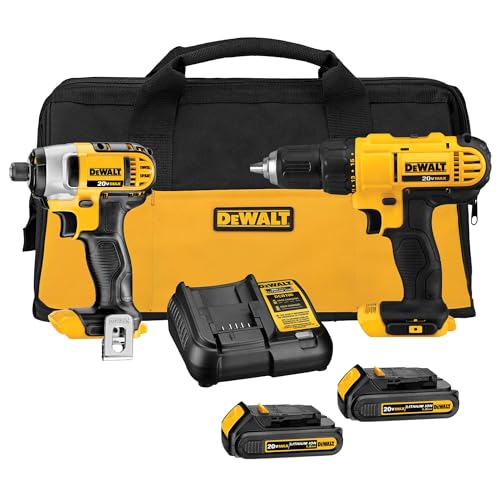
This kit has a drill/driver and an impact driver, two batteries, a charger and a bag. The listing rates the drill at up to 300 unit watts out and the impact driver at up to 1,400 in-lbs. Both tools have an LED light that stays on for 20 seconds after you release the trigger.

With two batteries you can keep one on the charger while you work. If you have a building project planned, this is the simplest way to get both tools on one system.
Check the current price of the DEWALT DCK240C2 combo kit on Amazon
Frequently asked questions
Do I need both a drill and an impact driver?
Not at first. A drill covers almost every job inside a house. You need both once you start driving many long screws, for a deck, a fence or a shed.
Is an impact driver better than a drill?
It is better at one thing: driving long or stubborn screws. A drill is better at making holes and at small, delicate screws.
Can an impact driver replace a drill?
Only partly. It can make rough holes in wood with hex-shank bits. It cannot take round-shank bits and has no clutch, so it is a poor fit for precise holes and small screws.
Is an impact driver the same as an impact wrench?
No. An impact wrench has a square drive for sockets and much more torque. It is for nuts and bolts, not screws.
Can an impact driver remove lug nuts?
Usually not. With a socket adapter it can turn small nuts and bolts, but most impact drivers lack the torque for car wheel nuts. That is a job for an impact wrench.
What does the clutch on a drill do?
It limits how hard the drill turns. When the screw reaches the set torque, the clutch slips and clicks, and the screw stops turning. Low numbers suit small screws. High numbers suit larger ones.
The bottom line
A drill makes holes and drives screws with control. An impact driver drives long screws fast and with less effort. If you own neither, buy the drill. If you already have a drill and a building project ahead, add an impact driver on the same battery system, or get a combo kit and have both from day one.