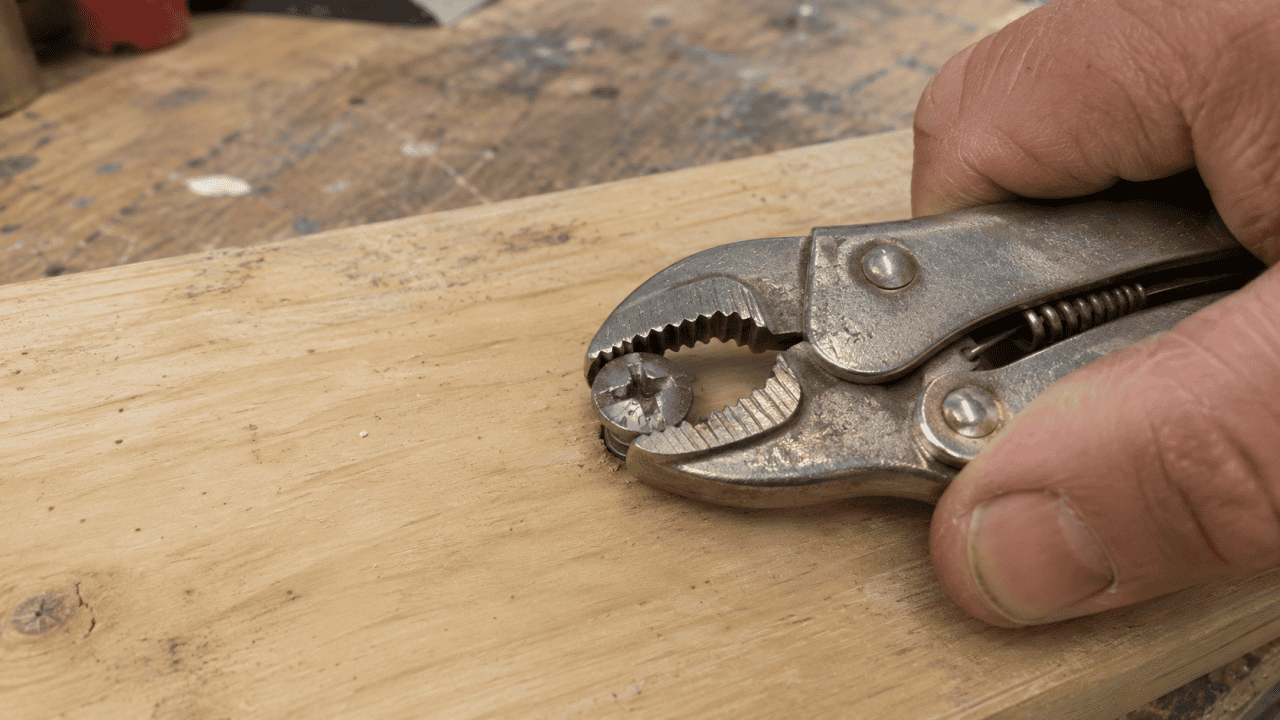
A stripped screw is one where the slots in the head are so worn that the driver spins and no longer turns it. It happens to everyone, and it is almost always fixable. The trick is to start with the method that does the least damage and only move up when it fails.
Stop as soon as the bit slips. Every extra slip grinds away more of the head and takes one of the easy methods off the table.
Pick your method in 30 seconds
| Your situation | Start with | If that fails |
|---|---|---|
| Head is slightly worn, bit still catches a little | Method 1: better-fitting bit | Method 2: rubber band |
| Head sticks out above the surface | Method 4: pliers | Method 7: cut a slot |
| Head is flush with the surface | Method 2: rubber band | Method 3: hammer tap, then Method 9: extractor |
| Head is recessed in a hole | Method 3: hammer tap | Method 9: extractor |
| Screw is rusted or seized | Method 6: penetrating oil | Method 5: manual impact driver |
| Torx, hex or Allen head | See the Torx and hex section | Method 9: extractor |
| Tiny screw in electronics | See the electronics section | A precision extractor |
| Head has snapped off | See the last resort section | Leave it and fix beside it |
Why screws strip
- The bit does not fit. A #1 Phillips bit in a #2 screw touches only the tips of the slots. This is the most common cause.
- The bit is worn. Rounded bit corners slip under load.
- Too much speed, too little pressure. A fast drill with a light push climbs out of the head.
- The driver is at an angle. Only part of the bit is engaged.
Phillips screws are the worst for this. The slots are tapered, so the bit is pushed up and out as the turning force rises. Soft screws, like the ones packed with cheap hardware, strip faster still.
Before you start
- Clean the head. Pick out paint, filler and dirt with a nail or a small pick so the bit can seat fully.
- Use a fresh bit that fits tightly. Try a few and keep the one with the least wobble.
- Push hard, turn slowly. About two thirds of your effort should be pushing in, one third turning.
- Wear safety glasses for any method with a hammer, a drill or a cutting wheel. Metal chips fly.
The 9 methods, least destructive first
1. Use a better-fitting bit
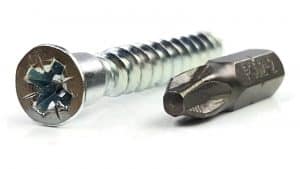
Works when: the head is only lightly worn.
- Check the screw type. Many screws that look like Phillips are Pozidriv, with four extra thin lines between the slots. They need a PZ bit.
- Try one size larger than the bit that slipped.
- Seat the bit fully, lean on it and turn slowly by hand.
What can go wrong: not much. If the bit still slips, stop and move on.
2. Add grip with a rubber band or steel wool
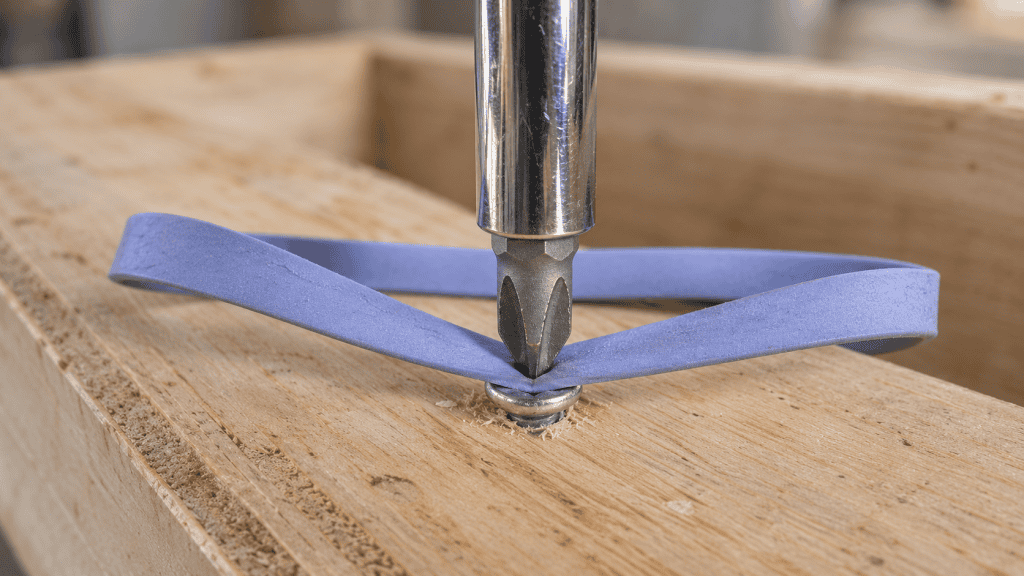
Works when: the head is worn but some of the slot is left.
- Lay a wide rubber band flat over the screw head.
- Press the bit through the band into the head.
- Push hard and turn slowly by hand, not with a drill at speed.
What can go wrong: a spinning bit shreds the band. A pinch of steel wool packed into the head does the same job and holds up better. A drop of valve grinding paste or a commercial screw-grip liquid also adds friction.
3. Tap the driver in with a hammer
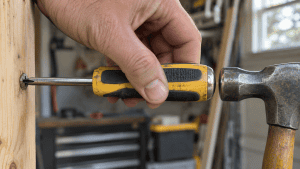
Works when: the screw is soft metal and the head is flush or recessed.
- Use a manual screwdriver, ideally one with a steel cap or a shaft that runs through the handle.
- Set the tip in the head and tap it firmly with a hammer a few times. The tip cuts itself a fresh seat.
- Keep pushing in and turn slowly.
What can go wrong: heavy blows can crack tile, plastic or thin wood around the screw. Tap, don’t swing.
4. Grip the head with pliers
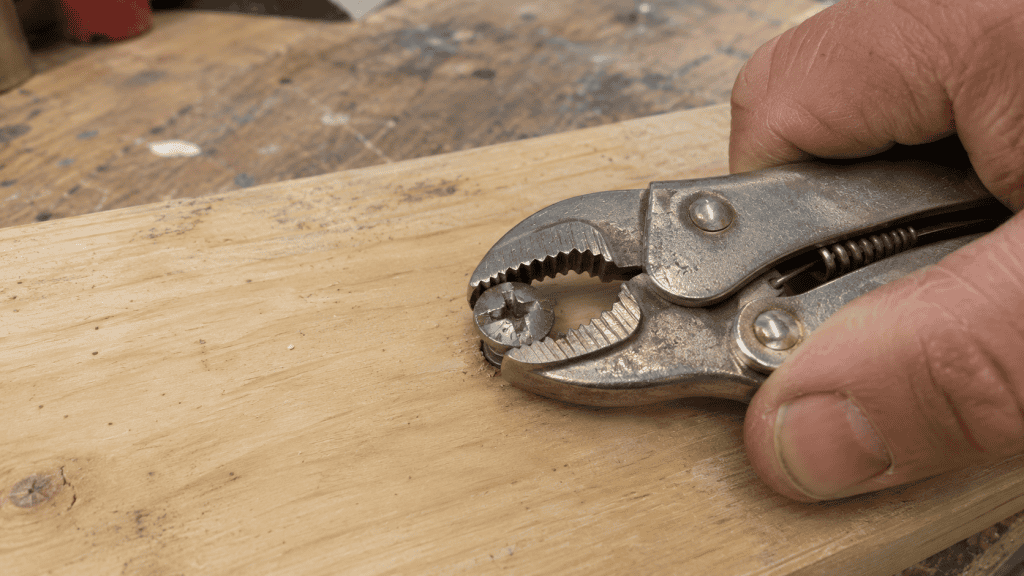
Works when: any part of the head stands above the surface.
- Clamp locking pliers onto the head as tightly as they will go. Screw removal pliers, which have serrations inside the tip of the jaws, grip even low dome heads.
- Turn counterclockwise. Once the screw moves, keep going a quarter turn at a time.
What can go wrong: the jaws mark the surface around the screw. Put a thin piece of cardboard or tape under them on finished work.
5. Use a manual impact driver
Works when: the screw is stuck as well as stripped, common on older metal hardware.
- Fit the best-matching bit and set the tool to loosen.
- Seat the bit in the screw and hold the body firmly.
- Strike the end with a hammer. Each blow pushes the bit in and turns it a little at the same time.
What can go wrong: this needs a solid surface behind the screw. Do not use it on drywall, thin sheet metal or anything fragile. A manual impact driver is a different tool from a cordless one. I explain the cordless kind in impact driver vs drill.
6. Soak a rusted screw with penetrating oil
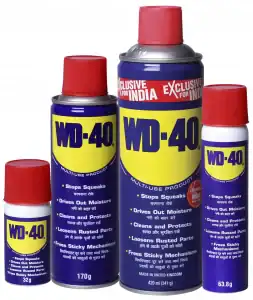
Works when: the screw is rusted into metal, or has sat outdoors for years.
- Apply a dedicated penetrating oil around the head and, if you can reach them, the threads.
- Wait at least 15 minutes. For heavy rust, reapply and leave it overnight.
- Tap the head a few times with a hammer to help the oil creep in, then try methods 3, 4 or 5 again.
What can go wrong: oil stains bare wood and makes the head slippery, so wipe the head dry before you put a bit in it.
7. Cut a new slot
Works when: the head is exposed enough to reach with a cutting wheel.
- Fit a thin metal cutting wheel to a rotary tool. A hacksaw works on a raised head.
- Cut one straight slot across the middle of the head, about half the depth of the head.
- Use the widest flathead screwdriver that fits the slot and turn slowly.
What can go wrong: the wheel will also cut the surface around a flush screw, and a slot cut too deep weakens the head so it snaps. Wear glasses. Cutting wheels can shatter.
8. Try a left-hand drill bit
Works when: the head is too damaged for a driver.
- Fit a left-hand (reverse) twist bit, a little smaller than the screw shank.
- Set the drill to reverse and low speed.
- Drill into the center of the head. Often the bit bites and the screw backs out by itself.
What can go wrong: a bit that wanders off center damages the surface. Mark the center with a punch first.
9. Use a screw extractor
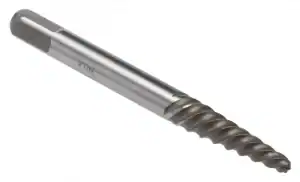
Works when: nothing else has worked. This is the most reliable method, and the next section covers it in detail.
- Punch and drill a pilot hole in the center of the screw.
- Seat the extractor in the hole.
- Turn it counterclockwise until the screw comes out.
What can go wrong: an extractor that snaps off in the screw. Read the next section before you start.
How to use a screw extractor properly
An extractor is a hardened steel bit with a reverse spiral. You drill a hole in the screw, the extractor wedges into the hole as it turns backward, and the screw comes out with it.
- Punch the center. Use a center punch and a hammer to make a dimple in the middle of the head. Without it, the drill bit will skate.
- Pick the right drill bit. The extractor set lists a drill size for each extractor. Use that size. Too small and the extractor will not seat. Too large and you thin the screw until it breaks.
- Drill straight and slow. Go about 1/8 to 1/4 inch deep, in line with the screw. A drop of oil helps in steel.
- Seat the extractor. Tap it lightly into the hole.
- Turn counterclockwise. A tap wrench gives the most control. With a drill, use reverse at the lowest speed.
- Keep steady pressure. When the extractor bites, the screw starts to turn. Keep going until it is out.
Never force an extractor. It is very hard, which also makes it brittle. If it snaps off inside the screw, you are left with a piece of hardened steel that ordinary drill bits cannot cut. If the screw will not move, stop, add penetrating oil, wait and try again.
Some sets use double-ended bits: one end drills the hole, the other end is the extractor. They work the same way and are quicker on small wood screws.
Last resort: when the head is gone
- Drill the head off. Use a bit slightly larger than the screw shank and drill until the head separates. Lift off the part it was holding, then grip the remaining stub with locking pliers and turn it out.
- Bore around it in wood. A hollow plug cutter removes a ring of wood around the screw. Pull the screw with the core, then glue in a matching wood plug.
- Leave it. If the broken screw is below the surface and in nobody’s way, fill over it and put the new screw beside it.
Stripped Torx, hex and Allen screws
These have a socket in the head, and the corners of the socket round off. The fixes are a little different.
- Check metric against inch. A rounded hex socket is often the result of using the wrong system. Try the nearest size from the other set. One of them may fit tighter.
- Go one size up and tap it in. For a rounded hex, a Torx bit that is slightly too large can be tapped into the socket with a hammer. Its points cut into the corners and grip.
- Use fresh keys. The ends of hex keys wear. Cutting or grinding a few millimeters off the end gives you sharp corners again.
- Small set screws in handles and faucets usually need an extractor. Use the smallest one in the set and go gently.
Tiny screws in electronics
For laptops, phones, glasses and toys, the rules are stricter. Disconnect the battery or power first. Use a precision driver of exactly the right size, press down firmly and turn slowly. A thin piece of rubber band can help. Do not use a hammer, heat or a power drill near a circuit board. If that fails, a precision extractor made for small screws is the next step.
What changes with the material
- Wood: the easiest. The wood gives a little, so pliers and extractors usually work. Protect the surface from tool marks.
- Metal: rust and thread-locking compound hold screws tight. Penetrating oil, time and impact are your friends.
- Plastic: avoid heat and heavy blows. Plastic cracks and melts. Stick to grip methods and a gentle extractor.
After the screw is out: fix the hole
A screw that stripped often leaves a damaged hole. Sort that out before the new screw goes in.
- Wood: dip a few toothpicks or a sliver of wood in wood glue, push them into the hole, snap them off flush and let the glue dry. The new screw will bite into the fresh wood. For a large hole, glue in a piece of dowel and drill a new pilot hole.
- Wood, quick fix: use a screw that is slightly longer or one size thicker.
- Metal: move up to the next screw size, or fit a thread repair insert if the size has to stay the same.
- Drywall: the old anchor is finished. Fit a new, larger anchor or a toggle bolt.
Always replace the stripped screw with a new one. A screw that has stripped once will strip again.
How to stop stripping screws
- Match the bit to the screw and replace bits when the corners look rounded.
- Drill a pilot hole in hardwood and near the ends of boards.
- Use low speed and push in line with the screw.
- Set the clutch. A drill clutch stops the bit before it can chew the head. Any of the drills in my list of the best cordless drills under $100 has one.
- Buy better screws. For decks and framing, Torx-head screws grip the bit far better than Phillips.
Tools worth owning for this job
These four picks are based on their Amazon listings (retrieved 2026-11-16). I have not tested them side by side. Check the current price before you buy.
ENGINEER PZ-58 screw removal pliers

These pliers are made for exactly this problem. The listing describes jaws with both vertical and horizontal serrations at the tip, so they grip a screw head from above, including low dome heads that normal pliers slide off. They are listed for screw heads from 3 to 9.5 mm across, are spring loaded and are made in Japan.
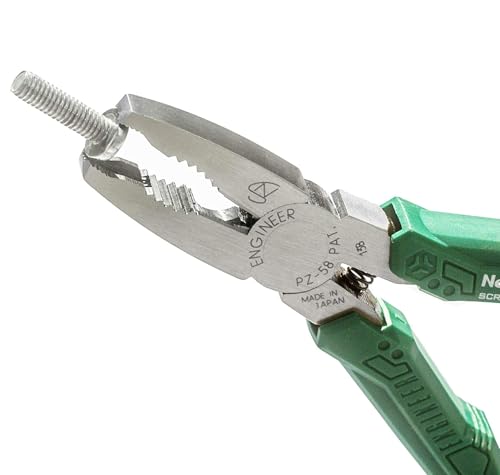
Check the current price of the ENGINEER PZ-58 on Amazon
IRWIN VISE-GRIP Original 10-inch locking pliers (102L3)

Locking pliers clamp onto a screw head and stay clamped, so both hands are free to turn. This is the straight-jaw 10-inch model in heat-treated alloy steel, with the adjusting screw in the handle and the classic trigger release. Every toolbox should have a pair.

Check the current price of the IRWIN VISE-GRIP 102L3 on Amazon
CRAFTSMAN hand impact driver set (CMMT14104)

A manual impact driver for method 5. You strike it with a hammer, and the listing rates it at up to 200 foot-pounds of torque per blow. The set includes five bits for slotted and Phillips screws, and the 3/8-inch drive also takes sockets.
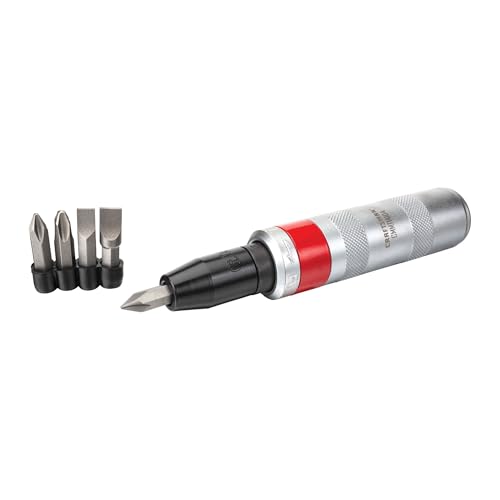
Check the current price of the CRAFTSMAN CMMT14104 on Amazon
BOSCH BSPE6D 12-piece screw extractor and drill bit set

A set of spiral-flute extractors with the matching black oxide drill bits, so you are not guessing the pilot hole size. The extractors are heat-treated carbon steel with left-hand flutes. It costs more than the no-name sets, and with extractors that is money well spent, because a snapped extractor is the worst result you can get.

Check the current price of the BOSCH BSPE6D set on Amazon
Frequently asked questions
Does the rubber band trick work?
Yes, on screws that are worn but not destroyed. It adds grip. It cannot replace metal that is gone, so on a badly rounded head it will not help.
Can I remove a stripped screw with a drill?
Yes, with a left-hand bit or an extractor, at low speed in reverse. Do not keep spinning a normal driver bit in the head. That only polishes it smooth.
How do I remove a stripped screw without an extractor?
Work through methods 1 to 7: a better bit, a rubber band, a hammer tap, pliers, a manual impact driver, penetrating oil and a new slot. Most screws come out before you reach the extractor.
What if the extractor breaks off in the screw?
Stop drilling. Standard bits will not cut it. You can try to shatter and pick out the piece with a small punch, grind it out with a carbide burr, or drill beside the screw and work it loose. Often the practical answer is to leave it and move the fixing.
Will WD-40 loosen a stripped screw?
It helps with a rusted screw. A dedicated penetrating oil works better and faster than a general-purpose spray. Neither fixes a worn head, so combine it with a grip method.
Can I reuse the hole?
Usually, after a repair. In wood, fill it with glued toothpicks or a dowel. In metal, go up a screw size. In drywall, use a new anchor.
The bottom line
Stop when the bit first slips. Try a better bit, then grip, then pliers if the head is proud. Use oil and impact on rusted screws. Keep the extractor for last, and use it slowly and straight. Then fix the hole and put in a new screw with a bit that fits.
1 thought on “How to Remove a Stripped Screw: 9 Methods in the Order to Try Them”
Comments are closed.