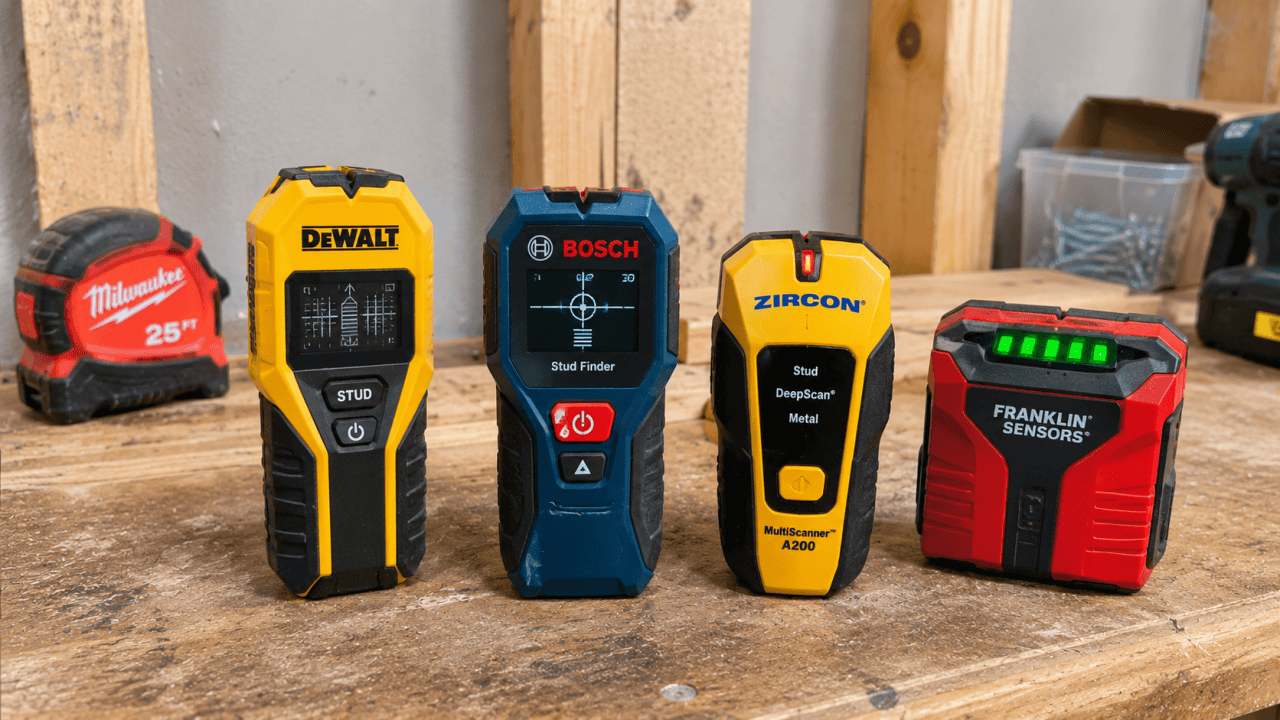
A stud finder has one job: tell you where the solid wood or metal is behind a wall, so the screw for your TV mount, shelf or cabinet goes into something that will hold. Cheap ones are famous for beeping everywhere. Good ones show you the whole stud at a glance.
I picked these seven from their Amazon listings and specs, and from where independent test-based reviews agree. I have not tested all seven side by side, and I say so plainly. What I can add after 15 years of working with tools is which type suits which wall, how to use one properly and how to check that what it found is really a stud.
Best stud finders: quick comparison
| Stud finder | Best for | Type | Stated depth | Live wire alert | Calibration |
|---|---|---|---|---|---|
| Franklin Sensors ProSensor M210 | Best overall | Multi-sensor, 13 sensors | 1.7 in. | Yes | None |
| Franklin Sensors ProSensor 710+ | Best with a built-in level | Multi-sensor, 13 sensors | 1.6 in. | No | None |
| Franklin Sensors ProSensor M90 | Best value multi-sensor | Multi-sensor, 9 sensors | 1.5 in. | No | None |
| Zircon MultiScanner A200 | Best single-sensor scanner | Electronic, 3 modes | 3/4 in., 1-1/2 in. in DeepScan | Yes | Each scan |
| DEWALT DW0100 | Best budget electronic | Electronic, center-find | 3/4 in. | Yes | Automatic |
| CH Hanson magnetic | Best magnetic | Magnets, no batteries | Finds fasteners | No | None |
| BOSCH GMS120-27 | Best for pipes and wiring | Wall scanner | Not stated on listing | Yes | Automatic |
Specs are taken from each Amazon listing (retrieved 2026-11-17).
Which stud finder for which wall
| Your wall | What works | What struggles |
|---|---|---|
| Standard 1/2 in. drywall | Any type on this list | Nothing, this is the easy case |
| Double or 5/8 in. drywall | Multi-sensor models and deep-scan modes | Basic 3/4 in. finders |
| Plaster and lath | A magnetic finder, or a scanner in metal mode to find the nail lines | Most electronic finders. The lath reads as one solid mass. |
| Tile over drywall | Deep-scan modes, used slowly | Basic finders, and anything on tile over a mortar bed |
| Heavily textured walls | Any finder, with a sheet of thin cardboard under it | Finders slid straight over the bumps |
| Ceilings | Multi-sensor models. Magnetic finders for the screw lines. | Single-sensor finders, which are hard to calibrate overhead |
The 7 best stud finders
1. Franklin Sensors ProSensor M210 – best overall
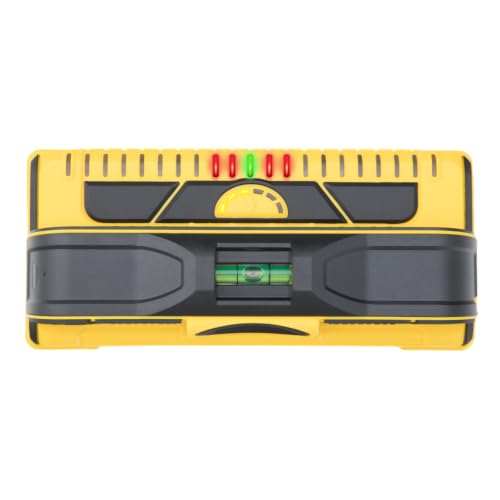
A normal stud finder has one or two sensors and shows you an edge. This one has 13 in a row, and a strip of LEDs lights up across the full width of the stud while you hold it on the wall. You see where the stud starts, where it ends and where the center is, without sliding back and forth.

It needs no calibration, so you can start anywhere, even on top of a stud. The listing gives a detection depth of up to 1.7 inches for wood and metal studs. It also has live wire detection, a bubble level and a slot for a pencil. It runs on two AA batteries, which are not included, and it accepts rechargeables.
- Good: shows the whole stud and double studs at once
- Good: no calibration step to get wrong
- Not so good: costs more than basic finders
- Not so good: batteries are not in the box
Buy it if: you want one stud finder that is hard to misread, for TV mounts, shelves and cabinets.
Check the current price of the Franklin M210 on Amazon
2. Franklin Sensors ProSensor 710+ – best with a built-in level

This is the wider, older sibling of the M210 with the same 13 sensors and the same full-width LED display. The body is long enough to work as a short level, and it has a bubble vial and a ruler built in. That is handy when you mark two studs and want the marks level with each other.

The listed depth is up to 1.6 inches, and like all Franklin finders it needs no calibration. It has no live wire alert. The listing warns that it is not compatible with rechargeable batteries.
- Good: full-width display plus a level and ruler in one tool
- Good: very large review base
- Not so good: no live wire detection
- Not so good: needs standard batteries, not included
Buy it if: you hang a lot of shelves and want to mark and level in one go.
Check the current price of the Franklin 710+ on Amazon
3. Franklin Sensors ProSensor M90 – best value multi-sensor
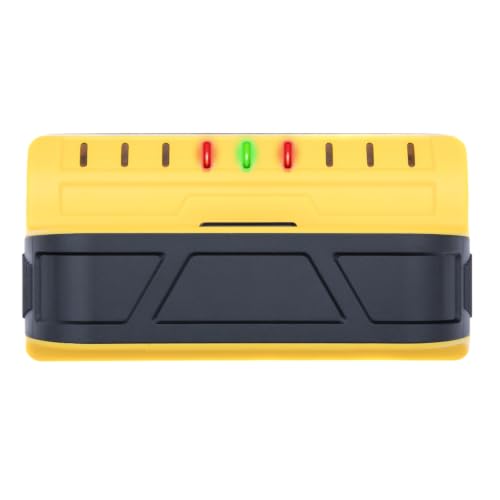
The M90 gives you the multi-sensor idea for about half the money. It has nine sensors where the big models have 13, so the bar of LEDs is shorter, but it still shows the full width of a stud and needs no calibration.
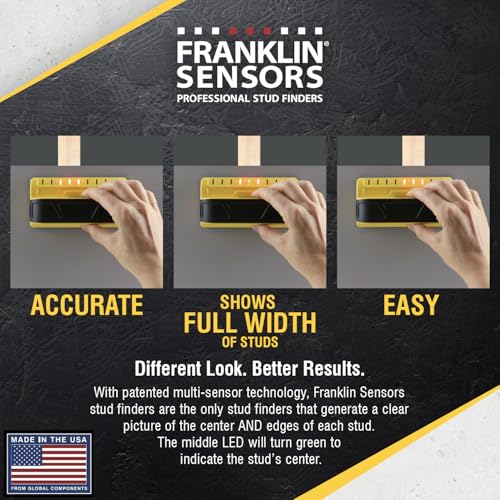
The listed depth is up to 1.5 inches for wood and metal studs. It is compact and takes two AAA batteries, not included, and it is not compatible with rechargeables. There is no level and no live wire alert.
- Good: multi-sensor display at a low price
- Good: small enough for a drawer or tool bag
- Not so good: shorter sensor bar than the 13-sensor models
- Not so good: no extras
Buy it if: you want a reliable finder for occasional jobs without paying for features you will not use.
Check the current price of the Franklin M90 on Amazon
4. Zircon MultiScanner A200 – best single-sensor scanner
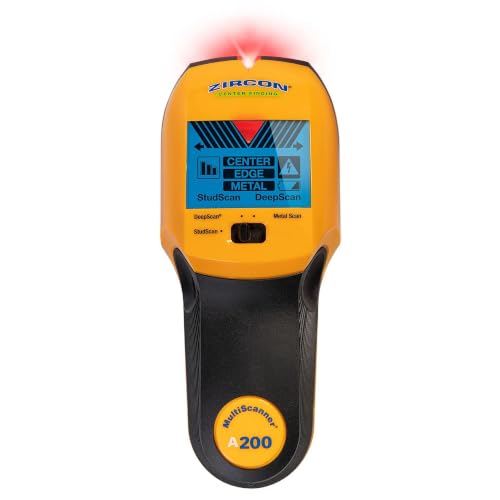
The A200 works the classic way. You calibrate it on the wall, slide it slowly, and it signals the stud edges and center on an LCD with a tone and a pointer of light. What it adds is modes: StudScan to 3/4 inch, DeepScan to 1-1/2 inches and a separate Metal Scan.
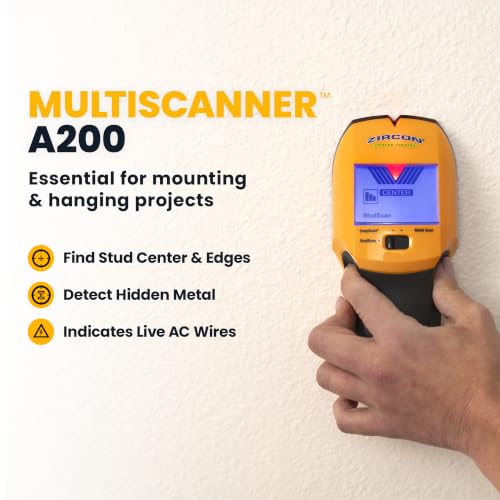
It also has a live wire warning. Metal Scan is the mode I would use on plaster, where it can pick up the lines of nails that mark the framing. It runs on a 9V battery.
- Good: separate metal mode and live wire warning
- Good: deep scan for thicker walls
- Not so good: must be calibrated correctly each time, away from a stud
- Not so good: slower to use than a multi-sensor bar
Buy it if: you want metal detection as well as stud finding, and you do not mind the calibrate-and-slide routine.
Check the current price of the Zircon A200 on Amazon
5. DEWALT DW0100 – best budget electronic
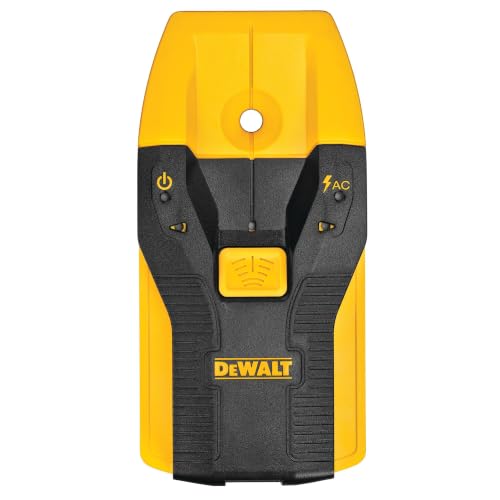
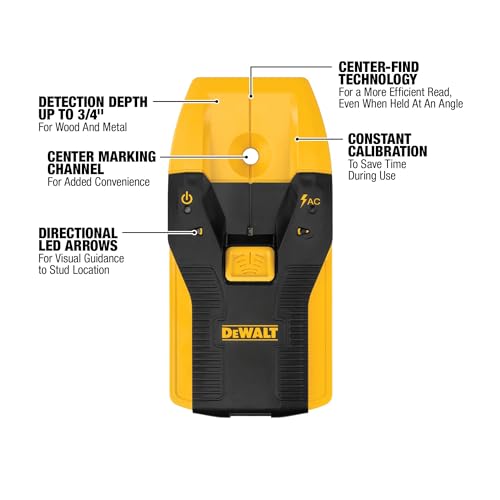
A slim, simple finder from a tool brand. It finds the center of wood and metal studs to a depth of 3/4 inch, shows the direction with LED arrows and beeps on target. It calibrates itself as you go and has AC wire detection. Batteries are included.
DEWALT is open about its limits. The listing says it will not detect through plaster, ceramic tile, foil-faced materials, concrete or brick, and that it is not made to find plastic or non-ferrous pipes. On ordinary 1/2-inch drywall, that is fine.
- Good: low price, batteries in the box
- Good: automatic calibration and a center-marking channel
- Not so good: 3/4 in. depth only
- Not so good: drywall only, by the maker’s own description
Buy it if: your walls are standard drywall and you want a basic finder for a few jobs a year.
Check the current price of the DEWALT DW0100 on Amazon
6. CH Hanson magnetic stud finder – best magnetic
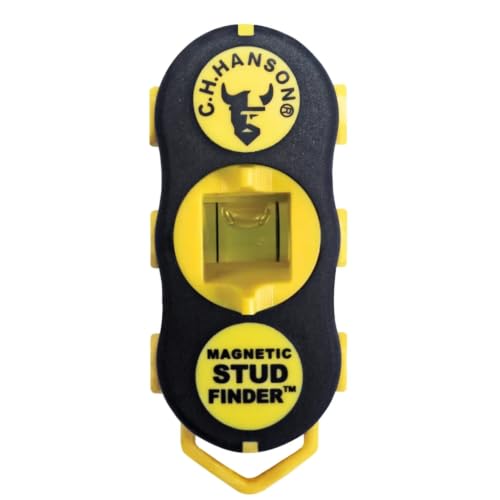
This is a small block with strong rare earth magnets and a level vial. It does not sense wood. It finds the steel screws or nails that hold the drywall to the stud. Sweep it over the wall in an S pattern, and when it snaps to a fastener and hangs there, you have found the stud line.
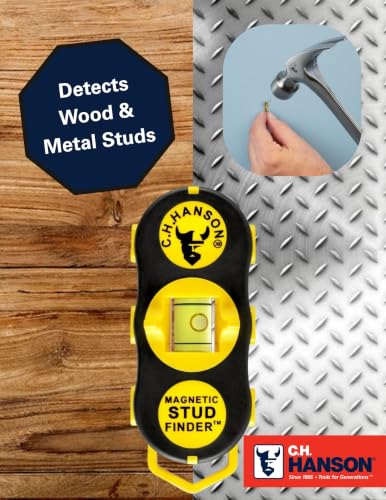
It needs no batteries and cannot be calibrated wrong. It also works on plaster, where it finds the nails in the lath. The weak point is that it tells you where one fastener is, so you need two or three hits in a vertical line to be sure.
- Good: no batteries, nothing to go wrong
- Good: works where electronic finders fail, including plaster
- Not so good: finds fasteners, not the stud edges
- Not so good: slower, and useless if fasteners are deep under filler
Buy it if: you want a cheap backup that always works, or you have plaster walls.
Check the current price of the CH Hanson magnetic stud finder on Amazon
7. BOSCH GMS120-27 wall scanner – best for pipes and wiring
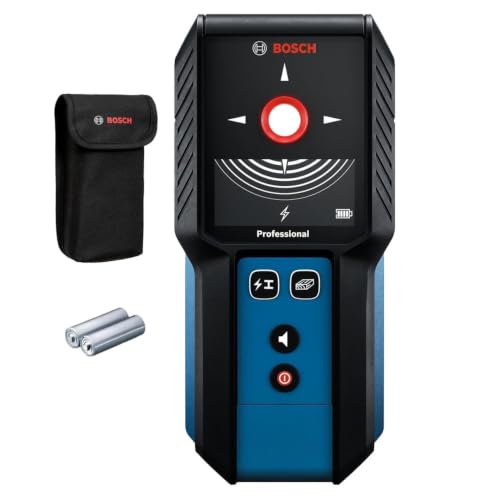
This is a step up from a stud finder. According to the listing it locates wood studs, metal framing, copper pipes and live AC wiring behind drywall. A ring around the marking hole turns green for clear and red when it detects a live wire, and the display shows the center of what it found.

The body is rated IP54 against dust and splashes and has a rubber casing. It comes with AA batteries and a soft pouch. It costs more than the others, and for hanging a picture it is more tool than you need.
- Good: finds copper pipe and live wiring as well as studs
- Good: built for site use, batteries included
- Not so good: the most expensive pick here
- Not so good: more modes to learn
Buy it if: you drill into walls often, especially in kitchens and bathrooms, and want to know what else is in there.
Check the current price of the BOSCH GMS120-27 on Amazon
How stud finders work
- Magnetic finders are attracted to the steel fasteners in the wall. Simple and dependable, but they only show points.
- Single-sensor electronic finders measure how dense the wall is under the sensor. A stud changes the reading. They compare each spot to the spot where you calibrated, so the starting point matters.
- Multi-sensor finders use a row of the same sensors and compare them with each other. That is why they need no calibration and can show the whole width of a stud at once.
- Wall scanners add metal detection and AC field detection, so they can also warn you about pipes and live cables.
Why stud finders get it wrong
- Calibrated over a stud. A single-sensor finder then treats the stud as empty wall and misses it. Move over a few inches and start again.
- Moved too fast. Slide slowly, about an inch per second.
- Textured, damp or freshly painted walls. All of them confuse density readings. Let paint dry for a couple of weeks and put thin cardboard over heavy texture.
- Foil-backed insulation or metal mesh. The sensor sees a solid sheet of metal everywhere.
- Pipes, cables and blocking. A finder cannot tell a stud from a pipe by density alone. That is why you confirm before you drill.
- Weak batteries. A fading battery gives odd readings long before the tool dies.
How to use a stud finder, step by step
- Fit fresh batteries and take pictures and other things off the wall.
- Hold the finder flat on the wall, a foot or so to one side of where you expect a stud.
- With a single-sensor model, press and hold the button and wait for the ready signal before you move. A multi-sensor model skips this step.
- Slide slowly sideways in a straight line. Mark the first edge with a pencil when the finder signals.
- Keep going until the signal stops, then come back from the other side and mark the second edge.
- The stud center is halfway between the two marks. A wood stud is 1-1/2 inches wide.
- Repeat a foot higher and a foot lower. The marks should line up vertically.
How to confirm it is really a stud
- Check the spacing. Studs are usually 16 inches apart from center to center, and sometimes 24. Find the next one. If the distance fits, you are on the framing.
- Check the line. A stud runs floor to ceiling. A pipe or cable may not. Scan at three heights.
- Use a magnet. A magnetic finder or any strong magnet will stick to the drywall screws along the stud.
- Look at the outlets. Electrical boxes are normally fixed to the side of a stud.
- Make a test hole. Where the fixture will cover it, push a thin finish nail or a 1/16-inch bit through the drywall. Solid resistance after half an inch means wood.
If there is no stud where you need one, use the right anchor instead. I cover that in which wall anchor to use.
Ceilings and joists
Ceiling joists are found the same way, with two differences. First, work out which way they run. They usually run across the shorter span of the room, and the screw lines in the ceiling drywall follow them. Second, holding and calibrating a single-sensor finder overhead is awkward, so a multi-sensor model or a magnet is easier. Joists are normally 16 or 24 inches apart.
Live wire detection: what it can and can’t do
A live wire alert senses the electric field around an energized AC cable. It is a useful warning, and it has limits. It cannot see a cable on a circuit that is switched off, shielded cable or cable in metal conduit, and it can react to static on the wall. Treat a warning as a reason to stop, and treat silence as no guarantee. Before you drill near switches, outlets and anywhere directly above or below them, turn off the circuit.
What to look for when you buy
- Number of sensors. More sensors mean you see more of the stud at once and make fewer mistakes.
- Depth. 3/4 inch covers single 1/2-inch drywall. For double drywall, tile or thick walls you want 1-1/2 inches.
- Calibration. No-calibration models are easier for occasional use.
- Extras. A live wire alert is worth having. A level saves a second tool.
- Batteries. Check whether they are included and whether rechargeables are allowed.
Frequently asked questions
Do stud finders work on plaster walls?
Most electronic ones do not work well, because the wood lath behind the plaster reads as one dense layer. A magnetic finder or a metal scan mode that picks up the nail lines is the better tool.
Are magnetic stud finders accurate?
Yes, for what they do. They find the exact spot of a steel fastener, and the fastener is in the stud. You need several hits in a vertical line to map the stud.
Why does my stud finder beep everywhere?
It was probably calibrated over a stud, moved too fast or used on a wall with foil, metal mesh or damp paint. Recalibrate on a different spot and slide slowly. Weak batteries cause the same problem.
How far apart are studs?
Usually 16 inches from center to center in North American homes, and sometimes 24 inches. Spacing changes near doors, windows and corners.
Can a stud finder detect pipes?
A basic one cannot tell a pipe from a stud. Scanners with a metal mode can find copper and steel pipe. Plastic pipe is very hard to detect with any of them.
Can a phone app find studs?
Phone apps use the compass sensor as a weak metal detector, so at best they find fasteners close to the surface. A magnetic finder does that job better for very little money.
The bottom line
For most homes, a multi-sensor finder is the one to buy: the Franklin Sensors ProSensor M210 if you want live wire detection and a level, or the ProSensor M90 if you want to spend less. Add a CH Hanson magnetic finder as a backup, and you can find and confirm a stud on almost any wall. Whatever you use, confirm before you drill.
1 thought on “Best Stud Finders: 7 Picks for Drywall, Plaster and Tile”
Comments are closed.